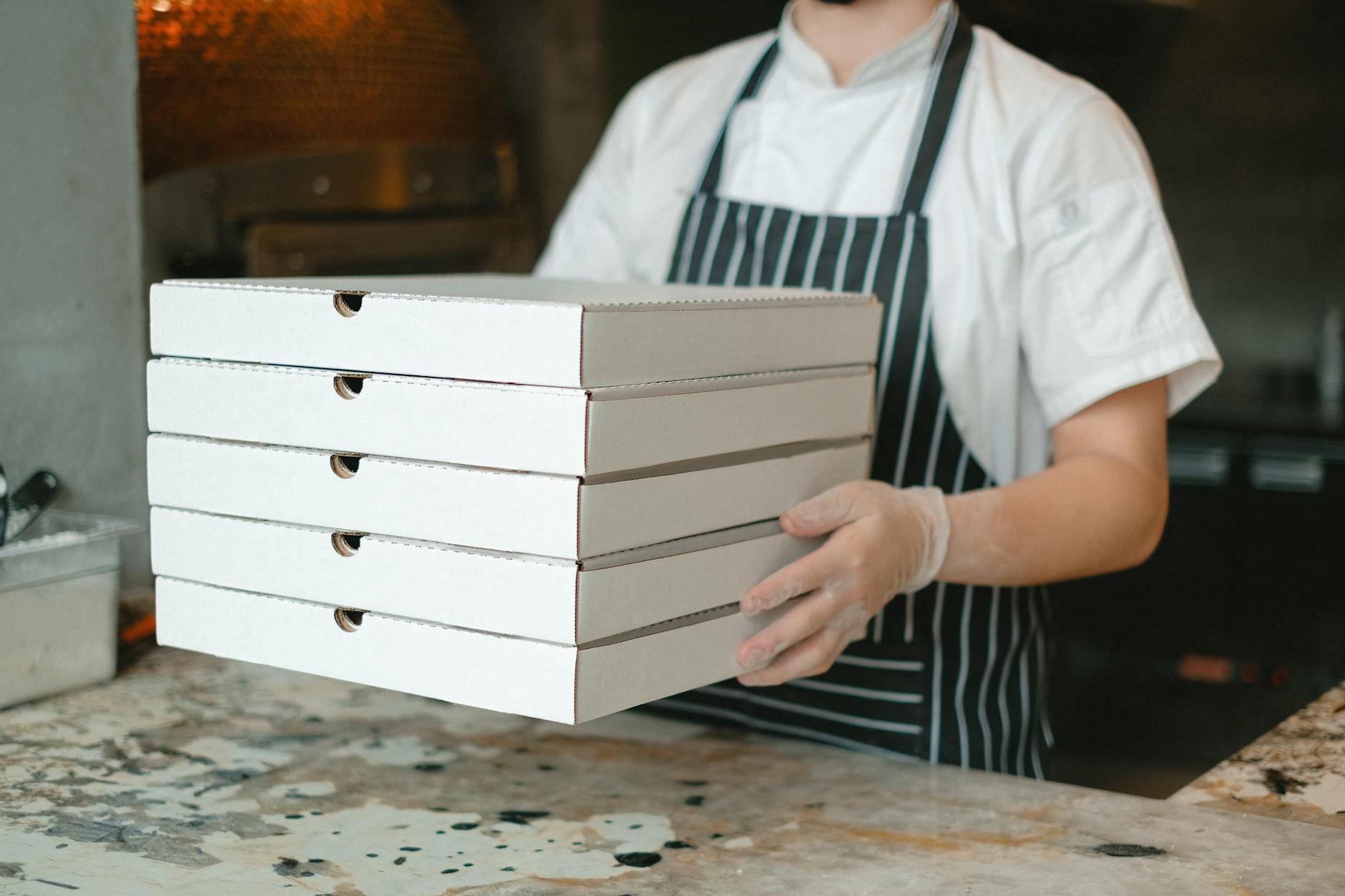
Walk through any industrial estate on the outskirts of a major British city and you will find them. Unmarked units with extraction fans running at full tilt, delivery riders stacking bags into thermal boxes, and not a single customer in sight. These are ghost kitchens — also known as dark kitchens or cloud kitchens — and they represent one of the most significant shifts in the food service industry in a generation. The concept is straightforward: a commercial kitchen that prepares food exclusively for delivery. There is no dining room. There are no waiters. There is no need for a prime location with foot traffic or an inviting shop front. The kitchen exists to cook, package, and hand food to a courier. The customer never visits. In many cases, the customer does not even know the kitchen exists as a physical place.
The model is not new in principle. Takeaway-only operations have existed for decades. But the ghost kitchen as a distinct business category — purpose-built shared kitchen spaces running multiple virtual brands under one roof — is a product of the pandemic era. What began as a survival strategy became a venture-backed industry. And now, in early 2026, the sector has had enough time to reveal what actually works, what was always unsustainable, and what the model looks like when the initial excitement fades.
The Pandemic Boom
The conditions that created the ghost kitchen boom were unique and unlikely to be repeated. When the UK entered its first lockdown in March 2020, restaurants with dine-in capacity faced an existential crisis overnight. Those that pivoted to delivery survived. Those that could not — or would not — often did not. The lesson was clear: having a delivery-capable kitchen was no longer optional. It was existential.
At the same time, consumer behaviour shifted permanently. Ordering food through apps became normalised across demographics that had previously considered it a novelty. Deliveroo, UberEats, and JustEat saw order volumes surge. Venture capital firms, watching this acceleration from Silicon Valley and the City alike, drew a logical conclusion: if delivery is the future of food, then the restaurant attached to the kitchen is unnecessary overhead. Strip it away, and you have a leaner, more scalable business.
Money followed quickly. Shared kitchen operators raised substantial funding rounds. Operators launched multi-brand concepts — a single kitchen producing meals under four or five different brand names, each appearing as a separate restaurant on delivery apps. A single site might simultaneously operate a burger brand, a poke bowl brand, a fried chicken brand, and an Indian street food concept, all prepared by the same team using largely the same equipment. The economics looked compelling on paper: multiple revenue streams from a single fixed-cost base.
The Economics: Promise and Reality
The financial case for ghost kitchens rests on one core advantage: reduced overheads. A traditional restaurant in a desirable location might spend a significant portion of its revenue on rent alone. Add front-of-house staff — hosts, waiters, bar staff, managers — and labour costs compound further. A ghost kitchen eliminates these entirely. There is no dining room to furnish, no ambiance to curate, no customer-facing staff to train and manage. The unit can be located in a low-rent industrial area. The kitchen can be smaller because there is no need to accommodate on-site dining service patterns.
These savings are real and significant. A ghost kitchen operator can launch a food brand with a fraction of the capital required for a traditional restaurant. Setup costs are lower. Ongoing fixed costs are lower. The break-even point arrives sooner — in theory.
In practice, the savings on one side of the ledger are offset by costs on the other. The most significant of these is delivery platform commission. Deliveroo, UberEats, and JustEat typically charge restaurants between 15 and 30 per cent of each order value. On a fifteen-pound order, the platform may take between two and four pounds before the restaurant sees any revenue. For a business already operating on food-industry margins — which are notoriously thin even in the best circumstances — this commission can eliminate profitability entirely.
There are additional costs that the early projections often underestimated. Packaging for delivery is more expensive than plating for dine-in. Food quality degrades during transit, leading to refund requests and negative reviews that directly impact platform rankings. Marketing spend on delivery platforms — promoted listings, discounts, loyalty offers — has become effectively mandatory to maintain visibility. And because ghost kitchens compete purely on the basis of the app listing, there is no walk-in traffic, no word-of-mouth from passers-by, and no visible presence in the community to build organic awareness.
The Delivery Platform Trap
This is the structural problem that has defined the ghost kitchen sector more than any other: the operator who depends entirely on third-party delivery platforms does not own the customer relationship.
When a customer orders through Deliveroo, the customer's relationship is with Deliveroo. The platform holds the customer data. The platform controls the search ranking. The platform determines the commission rate. The platform decides what promotions are available. The restaurant — or ghost kitchen — is a supplier, not a brand. It has no direct line to the person eating its food.
This creates a dynamic where the platform captures most of the value while the kitchen bears most of the operational risk. If Deliveroo changes its algorithm, a kitchen's orders can drop by half overnight. If a competing brand runs a promotion, visibility shifts. If the platform introduces its own private-label offering — as several have experimented with — the kitchen is competing against its own distribution channel.
The analogy to other platform-dependent businesses is instructive. Amazon marketplace sellers face identical dynamics: the platform controls discovery, pricing pressure is constant, and the seller's brand equity is effectively nil. Ghost kitchens that operate exclusively through third-party delivery apps have built their businesses on rented ground. When the landlord changes the terms, there is no recourse.
Venture Readiness
Launching a food business — whether ghost kitchen, restaurant, or catering operation — requires more than recipes and kitchen space. Zundara offers complete food business venture packages with all compliance documentation, food safety policies, HACCP plans, and financial models — everything needed to launch from day one.
The operators who succeed in this sector are those who start with their compliance and business infrastructure already in place, not those who try to build it after launch.
The Survivors: Who Made It Work
Not every ghost kitchen has struggled. The operators who have built sustainable businesses share several common characteristics, and none of them are accidental.
They built their own brands. The most successful ghost kitchen operators invested early in brand identity — not the borrowed identity of a platform listing, but genuine brand recognition. They built social media followings. They created distinctive packaging. They told a story that customers could connect with. When a customer orders from them, the customer knows whose food they are eating and can find them again without the platform.
They developed direct ordering channels. The survivors moved as quickly as possible to establish their own websites and apps for direct orders. Even a simple online ordering page that bypasses the delivery platform saves the full commission on every order. Some operators offer a small discount for direct orders — a saving that is more than offset by the elimination of platform fees. Over time, as the proportion of direct orders grows, unit economics improve dramatically.
They adopted subscription and pre-order models. Meal prep subscriptions, weekly menu boxes, and corporate catering contracts provide predictable revenue that is not subject to platform algorithms. These models also reduce food waste because production can be planned precisely against known demand. Several successful ghost kitchen operators now generate the majority of their revenue through subscription programmes, using delivery platforms only for customer acquisition rather than as their primary sales channel.
They controlled quality obsessively. Delivery food travels. It sits in thermal bags on the back of bicycles. It navigates speed bumps and traffic lights. Food that was designed for a plate does not always survive this journey. The operators who succeeded designed their menus specifically for delivery — dishes that maintain quality during transit, packaging that preserves temperature and texture, and portion sizes calibrated for the format. They treated the delivery bag as the serving environment and designed accordingly.
The Failures: What Went Wrong
For every ghost kitchen that found its footing, several did not. The failure patterns are consistent and instructive.
Overcrowded markets with no differentiation. When multiple ghost kitchens in the same area launch similar concepts — and when those concepts are also competing with established restaurants on the same delivery platforms — price becomes the only differentiator. Price competition on already-thin margins is a race to insolvency. The operators who launched generic burger or chicken brands with no distinctive positioning discovered that delivery apps are not short of options, and a new listing with no reviews and no following is effectively invisible.
Thin margins consumed by hidden costs. The overhead savings of the ghost kitchen model are real, but they do not create the wide margins that early projections suggested. Food costs, labour costs, packaging costs, platform commissions, marketing spend, kitchen rental, insurance, and compliance requirements collectively leave very little room for error. Operators who priced their menus based on optimistic assumptions about order volume or platform commission negotiations found themselves losing money on every order once real-world costs materialised.
No brand loyalty. A customer who orders a burger through Deliveroo and has a satisfactory experience is not necessarily loyal to the brand that made the burger. They are loyal to the convenience of the platform. Next time, they may order from whichever listing appears first, whichever is running a promotion, or whichever has the most recent positive reviews. Ghost kitchens that failed to build independent brand recognition found themselves trapped in a cycle of platform dependency with no customer base they could call their own.
Quality problems at scale. The multi-brand model — one kitchen operating five virtual brands — sounds efficient until you consider what it means in practice. A small kitchen team simultaneously preparing burgers, sushi bowls, curries, and wraps must switch contexts constantly. Quality control becomes harder. Consistency drops. Specialisation is sacrificed for breadth. The brands that customers actually trust tend to do one thing well. The brands that try to be everything tend to do nothing memorably.
The UK Market in 2026
The regulatory landscape for ghost kitchens in the UK has evolved considerably since the initial boom. Local authorities have become more attentive to the specific characteristics of these operations, and the regulatory framework has tightened in several important areas.
Food safety and hygiene requirements are unchanged but enforcement is sharper. Ghost kitchens are subject to the same Food Standards Agency requirements as any food business. They must register with their local authority, maintain a documented food safety management system based on HACCP principles, and undergo regular inspections. The Food Hygiene Rating Scheme applies to ghost kitchens just as it does to traditional restaurants, and ratings are increasingly visible on delivery platforms. A poor hygiene rating can effectively remove a ghost kitchen from the platforms entirely.
Council licensing and planning permissions have become more complex. Many ghost kitchens operate from industrial units that were not originally designated for food preparation. Change-of-use planning applications, extraction and ventilation requirements, waste management obligations, and noise considerations all require attention. Some local authorities have introduced specific policies around the concentration of hot food takeaway operations in particular areas, particularly near schools and in areas with existing public health concerns around diet-related illness.
Allergen and nutritional labelling requirements are stricter. Natasha's Law, which came into force in October 2021, requires all food businesses to provide full ingredient lists and allergen labelling on pre-packed food for direct sale. Ghost kitchens, which package food for delivery, fall squarely within these requirements. The documentation and systems needed to ensure accurate, consistent labelling across multiple brands and menu items represent a significant operational requirement that many early ghost kitchen operators underestimated.
Employment law considerations have also sharpened. Ghost kitchens that employ staff directly face the same obligations as any employer: minimum wage, pension auto-enrolment, holiday entitlement, and workplace safety. The informal employment practices that characterised some early operations have attracted regulatory attention, and operators who cut corners on employment compliance face both legal risk and reputational damage.
What Makes This a Viable Business
Despite the failures and the hype correction, the ghost kitchen model is not broken. It is, in fact, a fundamentally sound way to run a food business — provided you approach it as a real business rather than a get-rich-quick platform play.
The model works when three conditions are met simultaneously.
First, you must control your distribution. This does not mean abandoning delivery platforms entirely. They remain valuable for customer acquisition and incremental volume. But a viable ghost kitchen must have its own direct ordering channel that captures customer data and bypasses platform commissions on a growing proportion of orders. The platforms should be a funnel, not a foundation.
Second, you must own the brand. The food has to stand for something beyond its listing position on an app. This means a name that people remember, packaging they recognise, a social media presence that builds community, and a quality standard that generates genuine loyalty. Brand ownership is what converts a first-time platform customer into a direct repeat customer. Without it, every order is a one-off transaction mediated by a third party.
Third, you must have proper compliance documentation from the outset. Food safety management systems, HACCP plans, allergen documentation, staff training records, supplier due diligence, and financial controls are not optional extras to be addressed later. They are the operational foundation without which the business cannot function legally, safely, or sustainably. The operators who succeed treat compliance as infrastructure, not bureaucracy. It protects the business from enforcement action, gives confidence to commercial partners, and provides the management systems that enable consistent quality at scale.
The food business operators who approach compliance as a day-one priority — rather than something to be patched together after launch — consistently outperform those who do not. Complete documentation packages, including food safety policies, HACCP plans, supplier management procedures, and financial models, provide the structural foundation that allows operators to focus on what matters most: producing excellent food and building a customer base. Zundara provides exactly this kind of comprehensive, ready-to-deploy documentation for food business ventures.
The Bottom Line
Ghost kitchens were never going to replace restaurants. The social experience of dining out, the theatre of a kitchen working at full tilt behind a pass, the pleasure of a meal served to your table — these are not things that a delivery bag can replicate. What ghost kitchens can do, and what the best of them are doing, is provide a lower-cost entry point into the food industry for operators who are serious about building a brand and controlling their own economics.
The pandemic created the conditions for the model to be tested at scale. The two years since have provided the data to separate what works from what does not. The operators who treated ghost kitchens as a shortcut — a way to skip the hard work of brand building, customer relationship management, and regulatory compliance — have largely failed. The operators who treated the model as what it actually is — a more capital-efficient way to run a food business that still requires the same discipline, documentation, and operational rigour as any other food operation — have built something sustainable.
The ghost kitchen is not dead. It has simply grown up. The venture capital hype has faded. The multi-brand shell games have largely been exposed. What remains is a legitimate business model that works for operators who control their distribution, own their brand, and run their operations with the same compliance infrastructure that any serious food business requires.
The question is not whether ghost kitchens can work. They demonstrably can. The question is whether the operator understands that a kitchen without a dining room is still a food business, and food businesses succeed or fail on the same fundamentals they always have: quality, consistency, compliance, and the ability to build a customer base that comes back because they want to, not because an algorithm put you at the top of the page.
Ready to launch a food business with the right foundations? Complete venture packages with compliance documentation, food safety systems, HACCP plans, and financial models — everything you need from day one.
Explore Food Business Ventures at Zundara