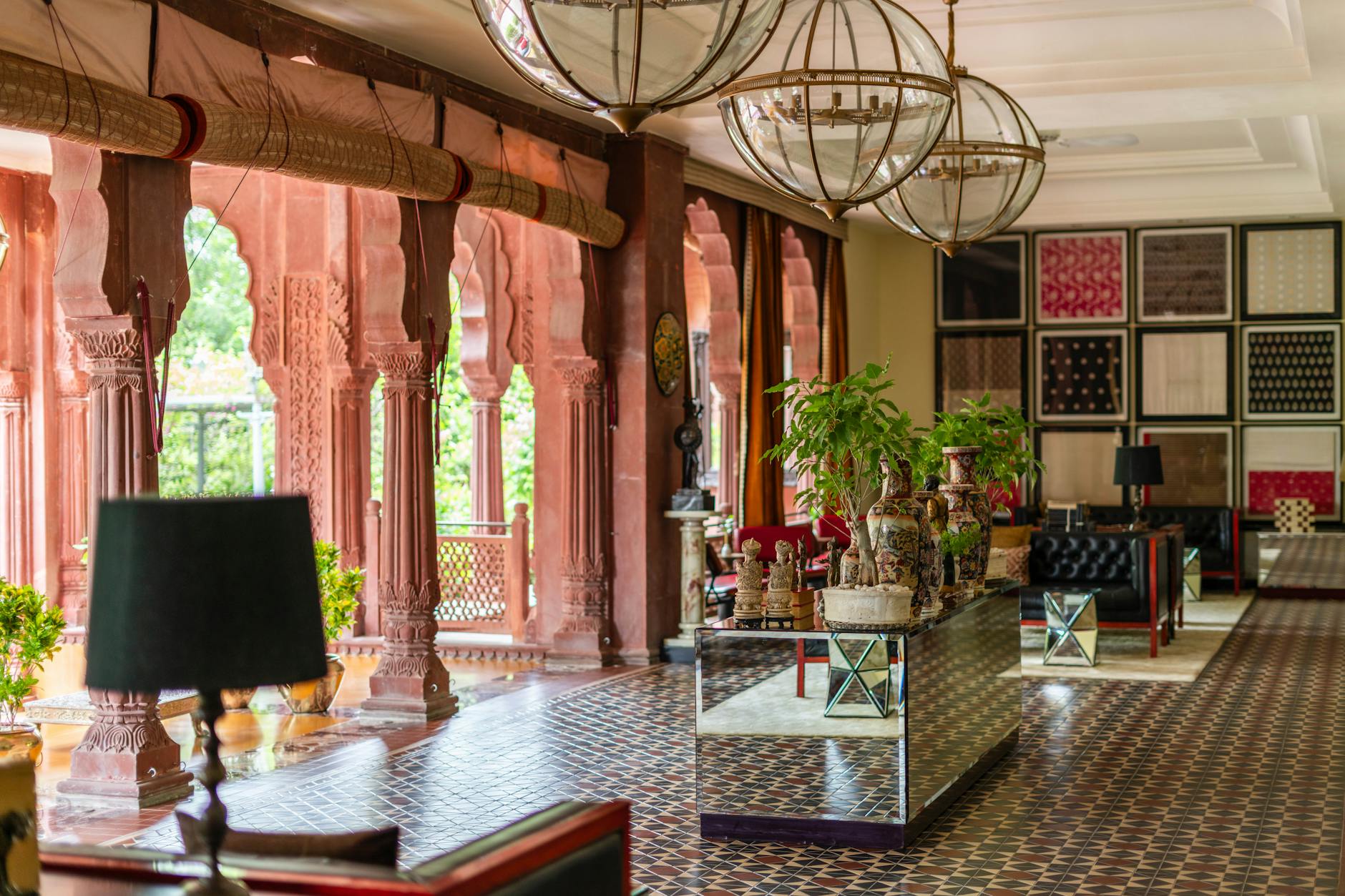
Walk into a boutique hotel and the first thing you notice is that everything feels intentional. The furniture is not catalogue standard. The lighting has been considered. The lobby smells different from a Holiday Inn. There are books on shelves that someone actually chose, artwork that was not purchased by the pallet, and a front desk experience that feels closer to being welcomed into a private members' club than checking into a room. This is not accidental. This is the product, and it is a product that a growing number of travellers are willing to pay a significant premium for.
The boutique hotel sector has been expanding steadily for more than a decade, accelerating sharply in the years following the pandemic. The reasons are both cultural and commercial. Travellers — particularly millennials and Gen Z — increasingly choose accommodation based on character, not just convenience. They want a property with a story, a sense of place, a connection to the neighbourhood it sits in. Chain hotels, by design, offer predictability. Boutique hotels offer the opposite: something that feels singular, curated, and unrepeatable. And they charge accordingly.
The Revenue Model: More Than Just Rooms
The foundation of any hotel's economics is the Average Daily Rate, or ADR. This is the average revenue earned per occupied room per night, and it is the single most important number on any hotelier's spreadsheet. Boutique hotels typically command an ADR premium of 20 to 40 per cent over comparable chain properties in the same market. In strong leisure destinations, that premium can be higher still.
The premium exists because boutique hotels sell something chains cannot easily replicate: distinctiveness. A 25-room property in a converted Georgian townhouse, with individually designed rooms and a cocktail bar run by a locally known mixologist, occupies a market position that no Travelodge can compete with. The guest is not paying for a bed. They are paying for an experience, and experience commands margin.
But ADR alone does not tell the full story. The best-run boutique hotels generate significant ancillary revenue — income from sources other than room bookings. This includes food and beverage, which in a well-operated boutique property can contribute 25 to 35 per cent of total revenue. It includes private event hire, from intimate weddings to corporate away days. It includes curated experiences: guided walking tours, cookery classes, spa treatments, tasting menus, and partnerships with local attractions. Some properties generate meaningful revenue from retail, selling branded products, local artisan goods, or collaborations with designers and producers.
The most profitable boutique hotels understand that the room is the anchor, not the ceiling. Every guest who walks through the door represents multiple revenue opportunities, and the properties that capture those opportunities consistently are the ones that thrive.
The OTA Trap: Commission and Control
If ADR is the most important number, the second most important is distribution cost — specifically, how much you pay to acquire each booking. This is where many independent hotels struggle, and where the economics of the sector become genuinely interesting.
Online Travel Agencies — Booking.com, Expedia, Hotels.com, and their subsidiaries — dominate hotel distribution. They spend billions on search advertising to capture travellers at the moment of decision, and they charge hotels a commission of 15 to 25 per cent per booking for the privilege of being listed. For a room sold at an ADR of, say, 180 pounds, an OTA commission of 20 per cent means 36 pounds goes to the platform before the hotelier has paid for housekeeping, breakfast, or the electricity to keep the lights on.
For chain hotels, OTA commissions are a manageable cost absorbed across thousands of properties and offset by loyalty programmes that drive repeat direct bookings. For an independent boutique with 15 to 30 rooms, OTA dependency can be existential. If 70 per cent or more of bookings come through OTAs, the commission bill alone can wipe out operating margin entirely.
The most successful boutique operators treat OTA reduction as a strategic priority. They invest in their own website and booking engine. They build email lists and social media followings that convert directly. They create loyalty mechanics — not necessarily formal programmes, but repeat-guest recognition, best-rate guarantees for direct bookers, and personalised communication that makes returning guests feel known. They use OTAs for visibility and discovery, but they work relentlessly to convert OTA guests into direct bookers for their second stay.
Properties that manage to achieve a direct booking ratio of 50 per cent or higher are typically in a strong financial position. Those stuck below 30 per cent are often fighting for margin regardless of how full the hotel is.
Hospitality Ventures
Zundara provides complete hospitality venture packages — operational procedures, food safety documentation, licensing applications, HR frameworks, and financial models for boutique hotels. From pre-opening compliance to ongoing governance, the documentation that takes months to build from scratch is available from day one.
Occupancy Economics: The Breakeven Equation
A hotel with every room full is not necessarily profitable, and a hotel at 60 per cent occupancy is not necessarily struggling. What matters is the relationship between occupancy, rate, and cost structure. The metric that captures this is RevPAR — Revenue Per Available Room — which is calculated by multiplying occupancy rate by ADR. RevPAR tells you what each room in the building earns on average, whether it is occupied or not.
For most boutique hotels, the breakeven occupancy rate sits somewhere between 55 and 65 per cent, depending on the cost base, the ADR achieved, and the contribution from ancillary revenue. This means the hotel needs to sell roughly six out of every ten room-nights just to cover its fixed and variable costs. Everything above that line is profit.
Seasonal management is critical. A coastal boutique hotel in Cornwall will see summer occupancy rates in the high eighties or above, but winter rates may drop to 30 or 40 per cent. The skill is in managing the annual average: extending the shoulder seasons with targeted offers, attracting corporate retreats and small conferences during midweek, and using dynamic pricing to maximise revenue during peak periods without alienating the guest base during quieter months.
Dynamic pricing — adjusting rates in real time based on demand, competitor activity, local events, and booking patterns — is no longer optional. Even small properties now use revenue management software that analyses market data and recommends optimal pricing. The difference between a static pricing approach and an active one can add 10 to 15 per cent to annual RevPAR, which for a property already operating near breakeven, can be the difference between loss and meaningful profit.
Midweek bookings deserve special attention. Many boutique hotels are leisure-focused and see strong weekend demand but empty corridors on Tuesdays and Wednesdays. Operators who cultivate corporate relationships — offering meeting rooms, team-building packages, and discounted midweek rates for businesses — can fill this gap and lift annual occupancy by five to ten percentage points.
What Makes a Boutique Hotel Work
Not every small hotel is a boutique hotel, and not every boutique hotel succeeds. The properties that work share several characteristics that go beyond aesthetics.
Location is foundational. The best boutique hotels sit in locations where demand already exists but supply is constrained. A market town with strong tourism but no distinctive accommodation. A city neighbourhood with cultural energy but only chain options. A coastal village where the only alternatives are B&Bs and holiday lets. Location creates the conditions; the property capitalises on them.
Positioning must be specific. A boutique hotel that tries to be everything to everyone is a boutique hotel that competes on price. The properties that succeed have a clear identity: a food-led hotel built around a destination restaurant, a wellness retreat with a genuine health proposition, a design hotel that attracts a creative and cultural audience, a heritage property that tells the story of its building and its place. Specificity creates pricing power.
Food and beverage operations can make or break the model. A well-run restaurant or bar generates its own revenue, attracts non-resident guests who may become future bookers, and creates the social atmosphere that defines the property's character. A poorly run food operation, by contrast, is a financial drain that damages the brand. Many successful boutique hotels hire experienced food and beverage operators, sometimes as concession partners, to ensure this element delivers rather than detracts.
Staffing in boutique hotels works differently from chains. Multi-role flexibility is essential. The person who checks guests in may also serve breakfast, manage events enquiries, and handle social media content. This is not corner-cutting; it is the economic reality of a small property, and when done well, it creates a more personal guest experience than the departmentalised structure of a large hotel. The key is hiring for attitude and training for skill, then paying well enough to retain the people who make the property feel special.
The Operational Reality: Compliance Is Not Optional
Behind the curated interiors and Instagram-ready lobbies, a boutique hotel is a heavily regulated business. This is the part that aspiring hoteliers most frequently underestimate, and it is the part that determines whether a property operates safely, legally, and profitably over the long term.
Fire safety compliance is non-negotiable. Hotels must meet the requirements of the Regulatory Reform (Fire Safety) Order 2005, including a documented fire risk assessment, maintained alarm and detection systems, emergency lighting, fire doors, evacuation procedures, and regular staff training. The fire risk assessment must be reviewed and updated whenever the premises change, and local fire services can inspect at any time.
Food hygiene is governed by the Food Safety Act 1990 and the Food Hygiene Regulations. Any hotel serving food needs a documented food safety management system, typically based on HACCP principles. Environmental health officers conduct unannounced inspections and award food hygiene ratings that are displayed publicly. A low rating does not just represent a compliance failure — it directly damages bookings.
Licensing requirements are extensive. A premises licence is needed to serve alcohol, and a personal licence is needed by the individual authorising sales. If the hotel hosts live music, dancing, or late-night refreshment, these activities must be covered by the licence. Applications go through the local authority and can attract objections from residents and responsible authorities. Getting licensing right from the outset is far simpler than trying to amend an inadequate licence later.
Beyond these headline areas, a boutique hotel must comply with health and safety law, employment law (including right-to-work checks, contracts, working time regulations, and pension auto-enrolment), data protection under GDPR, accessibility requirements, and building regulations. Each of these requires documented policies, trained staff, and ongoing monitoring. The documentation burden is substantial, and operators who treat compliance as an afterthought inevitably face problems that cost more to fix than they would have cost to prevent.
This is precisely why having the right operational documentation in place before opening is so valuable. The policies, procedures, risk assessments, and compliance frameworks that a boutique hotel needs are extensive but well-defined. Platforms like Zundara provide pre-built hospitality documentation packages that cover these requirements systematically, allowing operators to focus on the guest experience rather than spending months building paperwork from scratch.
Why Hospitality Is a Viable Business Model
Despite the operational demands, the case for boutique hotel ownership is stronger now than at any point in recent memory. Several structural trends are working in the sector's favour.
UK domestic tourism has grown significantly since the pandemic, with many travellers who previously defaulted to overseas holidays discovering — or rediscovering — the quality of domestic destinations. This behavioural shift has not fully reversed even as international travel has recovered. The domestic leisure market is larger now than it was in 2019, and boutique properties are disproportionately benefiting from this growth because they offer the kind of distinctive, memorable experience that drives social sharing and word-of-mouth recommendation.
The broader experience economy continues to expand. Consumer spending is shifting from possessions to experiences, and accommodation is increasingly viewed as part of the experience rather than a commodity input to a trip. This trend directly favours properties that invest in character, design, and guest experience over those that compete on price and volume.
Interest from investors is rising. Boutique hotel portfolios — small groups of two to five properties with a shared brand and operating model — are attracting both private equity interest and individual investors looking for an alternative asset class with genuine operational involvement. The model is scalable: an operator who proves the concept with one property can replicate it in adjacent markets with lower risk, because the brand, the operating systems, and the playbook already exist.
The financing landscape has also improved. Specialist hospitality lenders, development finance providers, and even crowdfunding platforms are increasingly comfortable with boutique hotel business plans, provided the operator can demonstrate a clear market, a credible financial model, and the operational capability to deliver. The days when only chain-affiliated hotels could access institutional finance are over.
Tourism as a whole continues to grow. International arrivals to the UK are forecast to exceed pre-pandemic levels within the next year, and the government has signalled ongoing support for the visitor economy as a driver of regional economic development. For boutique hotels in the right locations, the demand environment is favourable and likely to remain so.
The Bottom Line
Boutique hotels make money the way any premium product does: by offering something distinctive, charging accordingly, and managing costs with precision. The rate premium over chains is real and sustainable, but it is not enough on its own. Profitability comes from the combination of strong ADR, disciplined distribution (reducing OTA dependency), robust ancillary revenue, and the operational efficiency that allows a small team to deliver a disproportionately high-quality experience.
The model is not easy. It requires taste, operational discipline, regulatory compliance, and genuine hospitality — the kind that cannot be faked. But for operators who get it right, a boutique hotel is a business that generates income, builds equity, and creates something that people genuinely value. It is a brand that exists in physical space, and that is a powerful thing.
The barriers to entry are real but surmountable. The compliance requirements are extensive but well-defined. The revenue model is proven and, with the right documentation and operating framework in place, the path from concept to profitable operation is clearer than many people assume. The question is not whether boutique hotels can make money. They demonstrably can, and do. The question is whether you can build one that is distinctive enough to command the premium, and disciplined enough to protect the margin once you have it.
From operational procedures to financial models, Zundara provides complete venture packages for boutique hotel operators — everything you need before you welcome your first guest.
Explore Hospitality Ventures at Zundara